

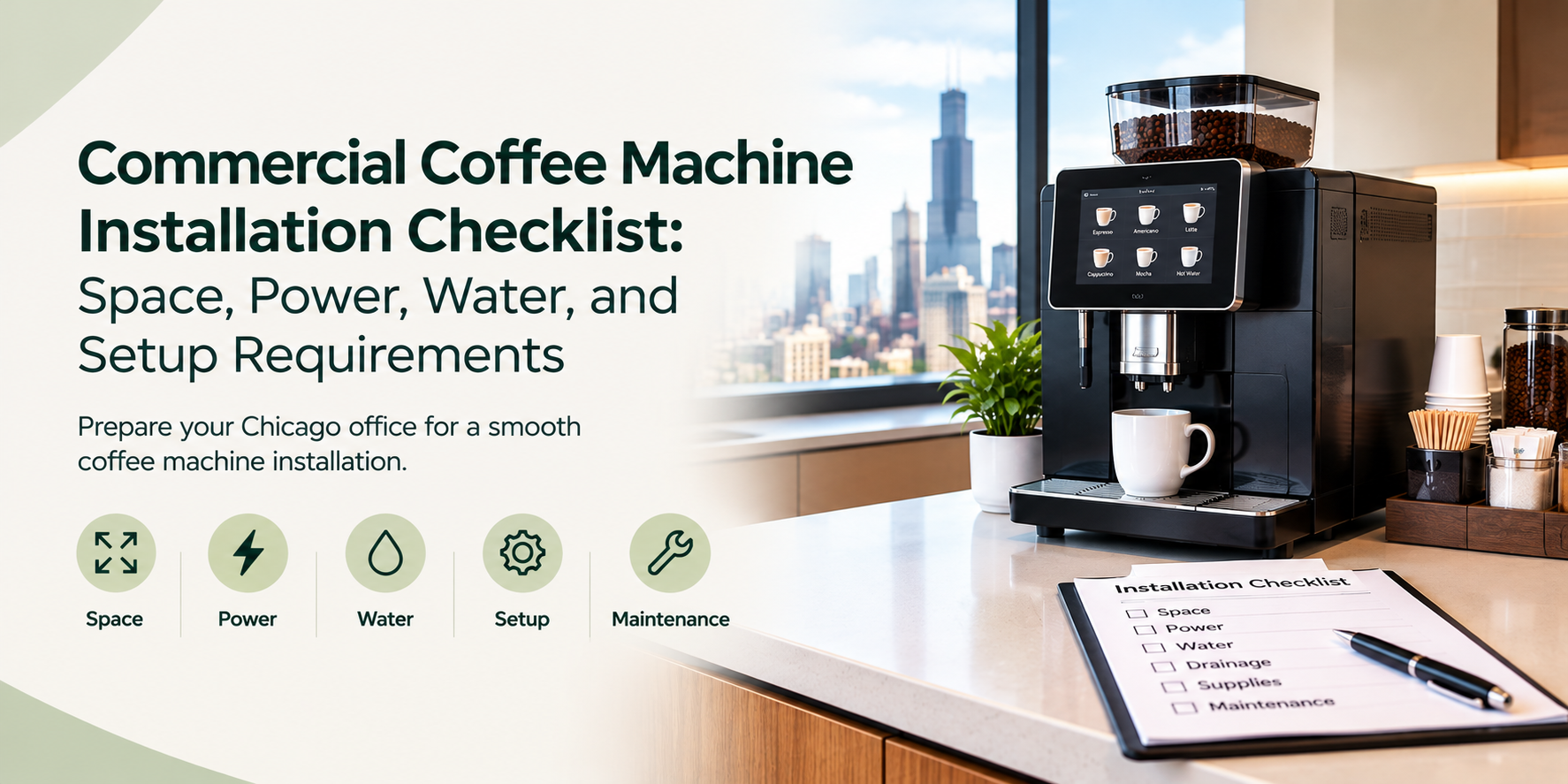
Installing a commercial coffee machine in your Chicago office requires careful planning. Before arranging installation, businesses should consider available space, electrical connections, water supply, drainage, machine capacity, and ongoing maintenance.
A well-planned coffee station helps employees access beverages conveniently while making cleaning and supply replenishment easier.
1. Measure the Available Space
Start by measuring the counter or floor area where you plan to install the coffee machine. Check the machine’s dimensions and allow additional space for ventilation, refilling ingredients, placing cups, and accessing removable components.
The right machine depends on the available space and the number of people using it daily. Explore the available Commercial coffee machines in Chicago to compare models and identify a suitable option for your workplace.
2. Check Electrical Requirements
Before installation, confirm the machine’s voltage, frequency, power consumption, and outlet requirements. Make sure the electrical connection can safely support the equipment.
If modifications are necessary, consult a qualified electrician before scheduling installation. Keep electrical connections protected from water and follow the manufacturer’s instructions.
3. Confirm Water Supply Requirements
Some commercial coffee machines require a direct water connection, while others can operate with a refillable water tank. Your choice should depend on the machine specifications, available facilities, and expected daily consumption.
Check the required water pressure, connection size, and filtration recommendations before installation. If plumbing work is needed, arrange it in advance to avoid delays.
Businesses planning a complete workplace coffee station can also explore TeraBeans office coffee solutions to understand the available service options.
4. Plan for Drainage and Waste Management
Check how the selected machine handles wastewater, drip trays, and used coffee grounds or other waste. Some configurations require manual emptying, while others may support an approved drainage arrangement.
Make sure the machine is positioned on a stable surface and that staff can clean the surrounding area without difficulty.
5. Select a Machine Based on Office Size
The appropriate machine depends on the number of employees, peak-hour demand, and preferred beverages. A compact model may work well for a smaller office, while a higher-capacity machine may be more suitable for a busy workplace.
Compare the available TeraBeans coffee machine models before making a decision. Consider beverage options, ingredient storage, refill frequency, and ease of use.
6. Prepare Coffee Supplies and Storage
A coffee station needs sufficient storage for coffee beans, beverage ingredients, cups, and other consumables. Choose a clean, dry location and establish a regular process for checking inventory.
Businesses that need ongoing beverage supplies and workplace coffee support can learn more through TeraBeans.
7. Establish a Cleaning and Maintenance Schedule
Daily cleaning and scheduled maintenance help keep commercial coffee equipment in good working condition. Follow the manufacturer’s instructions for cleaning removable components, milk systems, drip trays, and waste containers.
Before installation, confirm who will handle routine cleaning, servicing, and repairs. Clear responsibilities help prevent maintenance tasks from being overlooked.
8. Prepare the Installation Area
Before delivery, confirm that the machine can reach its intended location and that the necessary electrical and water connections are ready.
Use this checklist:
- Measure the installation area.
- Confirm power requirements.
- Prepare any required water connections.
- Check drainage and waste arrangements.
- Organize ingredients and consumables.
- Confirm delivery and installation arrangements.
- Arrange staff training and cleaning instructions.
If you need help selecting equipment or discussing installation requirements, contact TeraBeans before confirming your setup.
9. Understand the Total Installation Cost
The total cost may include equipment, delivery, installation, plumbing, electrical work, ingredients, and ongoing maintenance. Ask your provider which services are included and whether additional charges apply.
Confirm the terms of your coffee service agreement, including supply arrangements, maintenance responsibilities, and servicing availability.
Conclusion
Preparing the installation area before your commercial coffee machine arrives can reduce delays and make everyday use more convenient. Review space, power, water, machine capacity, and maintenance requirements before choosing your equipment.
Explore TeraBeans commercial coffee machines or contact the TeraBeans team to discuss coffee equipment and workplace coffee service requirements in Chicago.
Frequently Asked Questions
Check the available space, electrical requirements, water supply, drainage, machine capacity, ingredient storage, and cleaning arrangements. Confirm the selected model’s specifications before installation.
Not always. Some machines require a direct water connection, while others support a refillable tank. Check the manufacturer’s specifications to determine which setup is appropriate.
Choose based on employee numbers, daily beverage consumption, peak demand, available space, and preferred drinks. Compare machine specifications before making a final decision.
Cleaning frequency depends on the model, usage, and beverage types. Follow the manufacturer’s instructions for daily cleaning and scheduled maintenance.