

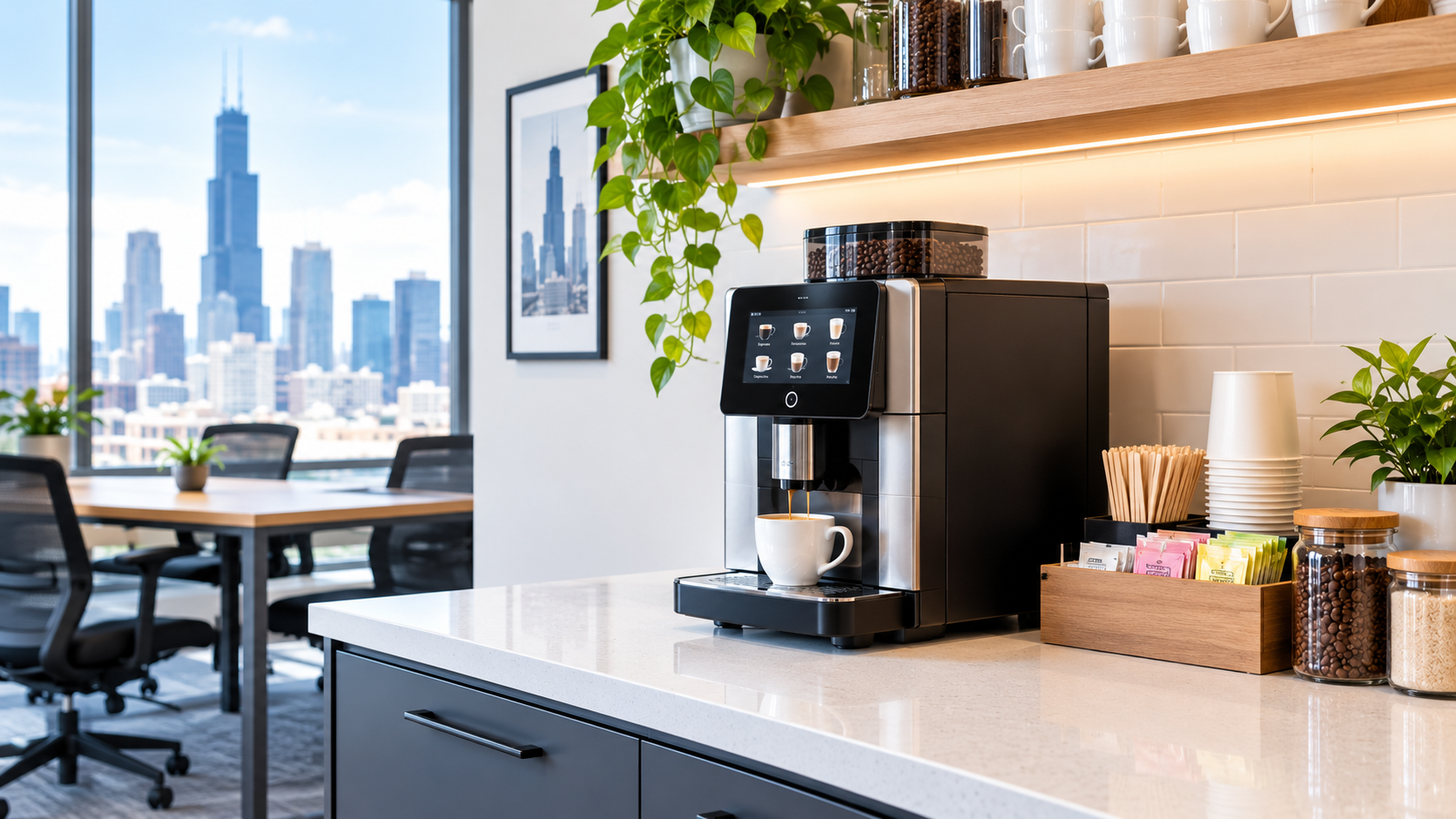
A good cup of coffee can make the workday more enjoyable and create a welcoming environment for employees and visitors. However, setting up a coffee station in a small office can be challenging when pantry space, counter space, and storage are limited.
For startups, small businesses, coworking spaces, and professional offices, choosing the right coffee machines for small offices in Chicago can help maximize available space while providing convenient access to quality coffee.
Compact commercial coffee machines offer practical solutions for businesses that want fresh coffee without dedicating an entire room to beverage preparation. From automatic coffee makers to bean-to-cup machines, businesses can choose equipment that suits their workspace, daily coffee consumption, and employee preferences.
Why Do Small Offices Need Space-Saving Coffee Machines?
Small offices often have limited pantry space and shared facilities. Installing a large commercial coffee machine may not be practical for these environments.
A compact office coffee machine can provide several advantages:
- Saves counter space: Compact designs fit comfortably into smaller kitchen areas and office pantries.
- Improves convenience: Employees can prepare coffee without leaving the workplace.
- Supports productivity: Accessible coffee stations make workplace breaks more convenient.
- Reduces clutter: Integrated brewing features can reduce the need for multiple coffee-making accessories.
- Creates a welcoming environment: A dedicated coffee station provides a convenient refreshment option for employees and visitors.
For businesses in Chicago, a well-planned coffee station can make even a small office pantry more functional.
Best Types of Coffee Machines for Small Offices
Not every office needs a large commercial brewing system. The best option depends on the number of employees, preferred beverages, available space, and expected daily usage.
1. Compact Bean-to-Cup Coffee Machines
Bean-to-cup coffee machines grind coffee beans and prepare beverages through an automated brewing process. These machines are suitable for businesses that prefer freshly ground coffee with minimal manual preparation.
For example, Tera Beans features the Mega-125 Touch, a compact office coffee machine designed for small offices, executive suites, and client reception areas.
Key advantages include:
- Freshly ground coffee for every preparation.
- Convenient automated operation.
- Consistent beverage preparation.
- Reduced need for separate grinding equipment.
Businesses can explore the available commercial and office coffee machines from Tera Beans to compare equipment options for their workspace.
2. Automatic Coffee Machines
Automatic coffee machines simplify the coffee preparation process. Employees can prepare their preferred beverages with fewer manual steps.
Depending on the model, features may include programmable settings, automatic brewing, adjustable coffee strength, and different beverage options.
They are suitable for offices where multiple employees use the same coffee station throughout the day.
3. Single-Serve Coffee Machines
Single-serve coffee machines prepare individual portions of coffee using compatible pods or capsules.
They can work well in small offices where employees have different coffee preferences or where coffee consumption is relatively low.
Benefits include:
- Individual beverage preparation.
- Simple operation.
- Minimal preparation time.
- Convenient portion control.
Businesses should also consider the recurring cost of pods and their storage requirements.
4. Compact Commercial Coffee Brewers
Compact commercial coffee brewers are designed for workplaces that need more capacity than a typical household coffee maker.
They can be useful for small offices, reception areas, meeting rooms, and shared employee spaces.
When selecting a commercial coffee brewer, consider its brewing capacity, dimensions, cleaning requirements, and suitability for daily use.
How to Choose the Right Coffee Machine for a Small Office
Before investing in a commercial coffee machine, businesses should evaluate their workspace and everyday requirements.
1. Measure the Available Space
Start by measuring the available countertop or pantry area. Consider the machine’s height, width, and depth.
Also leave enough space for ventilation, refilling water, opening compartments, and routine cleaning.
A compact machine should fit comfortably without restricting other pantry activities.
2. Consider the Number of Employees
The number of people using the coffee machine directly influences the equipment you need.
For example:
- Small teams may prefer compact machines with basic brewing options.
- Growing offices may benefit from automatic coffee machines with greater capacity.
- Shared workplaces may require commercial equipment designed for frequent use.
Consider peak usage during morning breaks and meetings rather than looking only at average daily usage.
3. Check Beverage Options
Employees may prefer different types of beverages, including espresso, Americano, cappuccino, and regular coffee.
Choose a coffee machine that offers the beverages your team regularly enjoys.
Businesses can also explore the coffee and beverage options offered by Tera Beans when planning their workplace refreshment requirements.
4. Evaluate Cleaning and Maintenance
A coffee machine should be easy to maintain, especially when multiple employees use it.
Look for practical features such as removable drip trays, accessible water tanks, automatic cleaning programs, and straightforward maintenance procedures.
Regular cleaning helps maintain beverage quality and supports the long-term performance of the equipment.
5. Compare Operating Costs
The purchase price is only one part of the overall investment.
Businesses should also consider:
- Coffee beans, pods, or ground coffee expenses.
- Milk and other beverage supplies.
- Water filtration requirements.
- Electricity consumption.
- Cleaning products.
- Servicing and maintenance costs.
Comparing these expenses can help businesses choose a coffee machine that fits their operating budget.
Smart Coffee Station Ideas for Small Chicago Offices
A well-organized coffee station does not require a large pantry. With thoughtful planning, even a limited office area can accommodate a convenient beverage setup.
Use vertical storage: Store coffee cups, stirrers, and supplies on shelves above or beside the machine.
Choose integrated equipment: Consider coffee machines with built-in grinders or other features that reduce the need for additional appliances.
Organize beverage supplies: Keep coffee beans, sugar, cups, and other essentials in clearly arranged storage containers.
Create a dedicated counter area: Position the machine in an accessible location without blocking walkways or shared kitchen facilities.
Plan for waste management: Provide suitable bins for used coffee grounds, pods, and disposable cups.
These small improvements can help businesses maintain a clean, organized, and functional coffee station.
Why Chicago Businesses Should Consider Professional Office Coffee Solutions
Businesses across Chicago have different workplace requirements. A small startup may need a simple coffee setup, while a professional office or coworking space may require equipment that supports frequent daily use.
Professional office coffee services in Chicago can help businesses explore suitable equipment, coffee supplies, and beverage arrangements.
When evaluating an office coffee provider in Chicago, consider:
- Availability of coffee machines suitable for smaller workspaces.
- Different coffee and beverage options.
- Equipment installation and setup support.
- Regular coffee supply availability.
- Maintenance and servicing arrangements.
- Flexible solutions based on employee requirements.
Choosing the right combination of equipment and supplies can help businesses create a convenient coffee experience without unnecessarily using valuable office space.
What Is the Best Coffee Machine Setup for Your Small Office?
The best coffee machine setup depends on your team’s size, coffee preferences, and available workspace.
For a small office with limited counter space, a compact automatic or single-serve coffee machine may be sufficient. Businesses that prefer freshly ground coffee can consider a compact bean-to-cup machine.
For offices with more employees or frequent visitors, a commercial coffee brewer may offer better capacity.
Instead of selecting equipment based only on appearance or price, compare machine dimensions, daily capacity, beverage options, cleaning requirements, and ongoing costs.
Conclusion
Setting up a convenient coffee station does not require a large office kitchen. With the right equipment, businesses can make better use of limited space while providing employees with easy access to quality coffee.
From compact bean-to-cup machines to automatic coffee makers, several options are available for small workplaces. The key is to choose equipment that matches your office size, daily coffee requirements, and maintenance expectations.
If your business is looking for practical office coffee solutions in Chicago, explore the available options from Tera Beans and find a coffee setup that works for your workspace.
Contact Tera Beans today to explore coffee solutions for your office.
Frequently Asked Questions
A compact automatic or bean-to-cup coffee machine can be a good option for a small office. The right choice depends on the number of employees, available space, preferred beverages, and daily coffee consumption.
Single-serve coffee machines and compact automatic coffee makers generally require less counter space than larger commercial coffee machines. Always check the machine's actual dimensions before purchasing.
Yes. Compact bean-to-cup coffee machines can be suitable for small offices because they combine grinding and brewing in one unit. They are useful for businesses that prefer freshly ground coffee and convenient preparation.
The required capacity depends on the number of employees and their coffee consumption. Businesses should estimate average daily usage and account for peak demand during morning breaks and meetings.
Businesses should compare machine size, brewing capacity, beverage options, maintenance requirements, operating costs, and available installation space.